
Contesting Barmen
Freedom for unity?

At the end of May, 1934, pastors and theologians from Germany’s Protestant churches met in the industrial city of Wuppertal-Barmen to draft a theological response to the Nazi government’s intrusion into church affairs. More accurately, they gathered to respond to the ‘German Christians,’ those Protestants who embraced Nazism and Nazi or German nationalistic changes to church doctrine. The German Christians’ ideas were horrific but unsurprising: to them, Jesus was less the Jewish messiah than an Aryan hero; the Old Testament was minimized; clergy with Jewish heritage were effectively defrocked; and everything in the church, as in the state, was subject to the ultimate authority of the Führer.
Those who met at Barmen represented a small minority of German Protestants opposed to these changes. They called themselves the ‘Confessing Church.’ Their beliefs diverged sharply, and they included Lutheran, Reformed, and United ministers. Politically, they ranged from socialists like Karl Barth to liberals and conservatives and even some who were personally pro-Nazi but resented Hitler stepping on the church’s toes.1
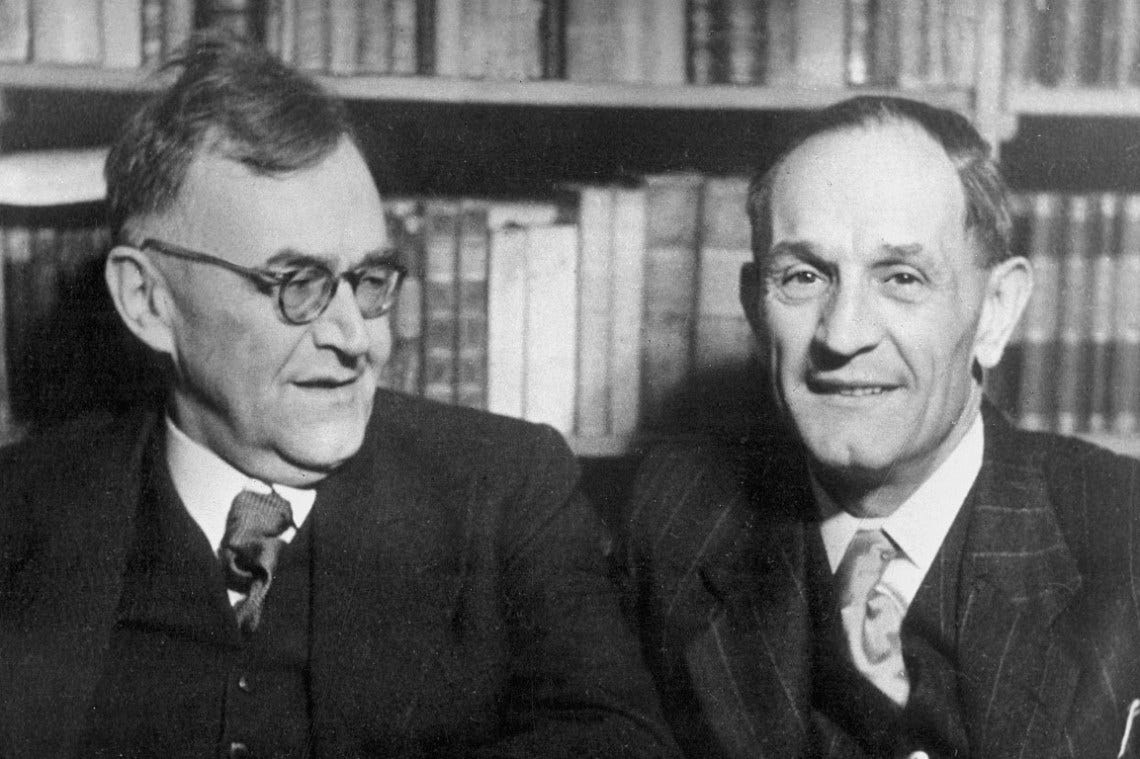
They produced a document called the Barmen Declaration, primarily authored by Barth. You can read an English translation here, beginning on page 281. After a preamble and articles explaining the historical context, the Declaration includes six theses. Each quotes Scripture, asserts a doctrinal principle drawn from it, and rejects a corresponding false understanding. Thesis 1 gets quoted most frequently. “Jesus Christ, as he is attested for us in Holy Scripture, is the one Word of God which we have to hear and which we have to trust and obey in life and in death.” This sets the tenor for what follows: Christ has given the church a specific mission, which cannot be compromised or restricted by any earthly authority. The church must be free to preach the Gospel.
But although theologians and pastors today often quote the Barmen Declaration, which has authoritative status in churches like the PCUSA, the theses have a problem. They are extremely abstract. They do not mention Hitler or Nazism, let alone the concrete political and social evils of the Third Reich.2 This means that different Christian groups can lay claim to Barmen’s legacy and draw on its ‘star-power’ to legitimate their own stances. Everyone wants to see themselves as successors to the Confessing Church, and Barmen’s vague statements enable just this self-insertion.
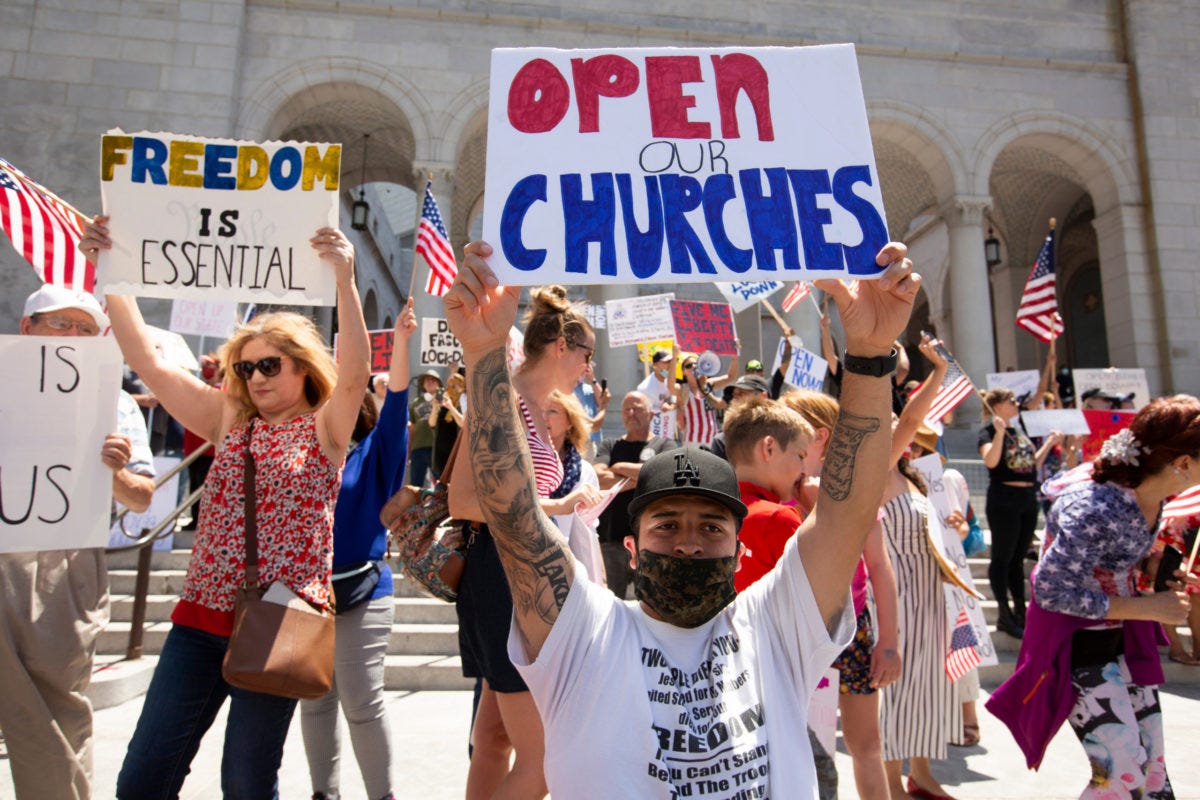
In the American context, David Congdon described the conflict of interpretation in 2024. While left-wing Christians read Barmen as an inspiration for their opposition to white Christian nationalism,3 Trump’s right-wing supporters have used the same text to justify their opposition to COVID-19 shutdown policies and other perceived attacks on religious liberty. As Congdon observes, the Declaration “says that the church obeys the Word of God alone but does not clarify what this Word means apart from an abstract idea of freedom.” For example, Barmen rejects the idea that the state should exceed “its special commission” of “providing for justice and peace.” Does this mean ICE raids on churches? Or mask mandates and laws which forbid anti-gay discrimination?
The Barmen Declaration’s text doesn’t answer these questions. It doesn’t interpret itself. Congdon concludes by asserting that “It is not enough to support the freedom of the church; today we need a statement that clearly declares what kind of freedom is consistent with the gospel” (emphasis mine). In other words, the Declaration falls short. It’s not enough for the church to be free to follow (someone’s idea of) the Word of God. Christians need to know what their freedom is and what it is for.
I concur. Mere admiring reference to Barmen and the Confessing Church, or even study of the Declaration’s theological principles, is not adequate. I wonder, however, if the Barmen Declaration itself contains a material principle which at least points to a more substantive concept of freedom for the Gospel. My proposal is this: the Declaration’s repeated emphasis on Christian unity should guide our interpretation and appropriation of its principles. When we draw on Barmen to promote genuine Christian unity, we do so faithfully. When our usage of Barmen cuts against genuine Christian unity, it violates the implicit spirit of the Declaration.
Unity, and related words like “one” and “common” recur over and over in the Declaration’s few pages. The synod was clearly anxious that their opposition to the Nazi government and German Christian-dominated church authorities would be seen as disunity: schism against the church of Jesus Christ, the apostles, and the 16th century Reformation. This they contested in strong terms. “It was not their intention to found a new church or to form a union,” they protested, but to oppose “attempts to establish the unity of the German Evangelical Church by means of false doctrine [or] by the use of force and insincere practices” (emphasis mine). Genuine Christian unity, they insisted, “can come only from the Word of God in faith through the Holy Spirit.”
“Be not deceived by loose talk,” they continued, “as if we meant to oppose the unity of the German nation! Do not listen to the seducers who pervert our intentions, as if we wanted to break up the unity of the German Evangelical Church or to forsake the Confessions of the Fathers!” And after listing the six theses, the Declaration describes them as “the indispensable theological basis of the German Evangelical Church as a federation of confessional churches” and exhorts German Protestants to “return to the unity of faith, love, and hope” precisely by resisting the Nazi church.
In other words, the Barmen Declaration was not only written to defend the freedom of the church; it was written to call the church back to authentic unity. So what is the church’s unity? In what sense is the church of Christ ‘one,’ as we confess in the Nicene Creed? We can only gesture towards an answer by way of contrasting errors.
First, genuine Christian unity is not a uniformity of belief and practice imposed by physical or spiritual force. Silencing, arresting, or executing ‘heretics’ does not make Christian unity. Neither is keeping people in line with the threat of damnation after death for leaving the ‘one true church.’ This can create a community which is outwardly unified, but only at the cost of the church’s catholic breadth. “If you immediately condemn anyone who doesn't quite believe the same as you do,” wrote Martin Bucer in the 16th century, “pray tell, [who] can you still consider a brother?”
Second, Christian unity is not a false harmony which papers over disagreements and differences. We needn’t pretend that we all agree or that our disagreements do not sometimes concern vital matters. Unity is also not a bland ‘niceness’ which expects some (in practice, those without power) to keep quiet and avoid disturbing the peace or consciences of others. This can create a superficially tranquil community, but at the cost of simmering tension and, worse, a unjust burden on those who, by their very existence, threaten to ‘rock the boat.’ LGBT Christians, disabled Christians, and abuse survivors, among others, have often borne this cross: ‘Why do you have to upset everything?’
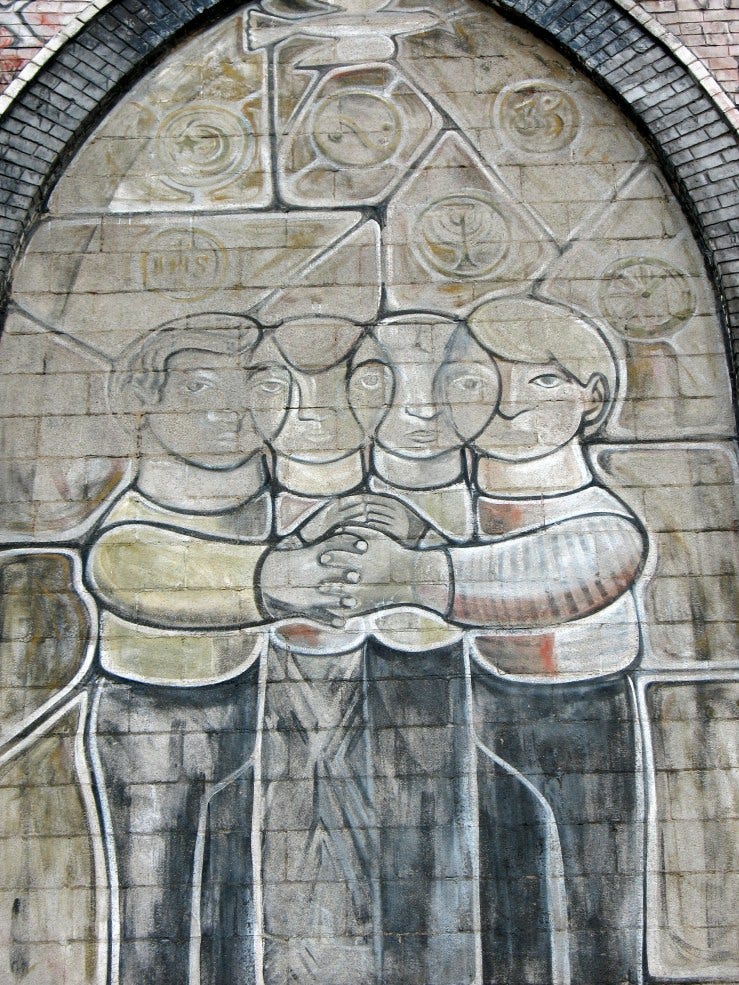
Third, Christian unity cannot come at the expense of non-Christians. It cannot be, in other words, a unity sprung from mutual opposition to some other. Christian unity is not a sense that, in the face of secularism or Islam, Catholics and Protestants aren’t so different after all. This can create feelings of brotherhood, but at the cost of the proper posture of believers towards the world and their neighbors. Instead of basically affirming the neighbor and being open to the world, this encourages the church to be closed-off, to demand the world and other people ‘turn or burn.’ This is entirely wrong, like a family which can only conceive of loving each other by hating everyone else. This temptation is probably the most relevant in applying Barmen to political life.
Fourth and finally, Christian unity is not merely an invisible, ‘spiritual’ reality. We are one in the sense that God has elected and preserves one communion of saints, but that cannot be the full story. This account is theologically convenient, especially since the Reformation, but it comes at the cost of unity having any relevance to our life and faith. If true unity is only to be realized in the world to come, then our current divisions are no big deal. But as Barth observed years later,
The insight expressed at Barmen — Jesus Christ is the one Word of God whom we have to trust and to obey — did not at first correspond to the flesh and blood reality of the Church but contradicted it, and had still to be repeated, attained and practiced in a wearisome struggle (Church Dogmatics II.1, 175).
Our lack of unity — genuine unity, without coercion, suppression, or othering — is not something to which Christians can become resigned. It must be the subject of “a wearisome struggle.” This struggle includes standing up for justice, truth, mercy, and peace. It means rejecting the use or threat of force, rejecting the false peace built on injustice, and rejecting the scapegoating or demonization of those outside the Christian community.
The church’s freedom to be the church — the one church of Jesus Christ — entails its freedom to be this sort of open community. The freedom to proclaim the Gospel, which Barmen defended so powerfully, demands the responsibility of unity; genuine Christian unity makes the Gospel proclamation credible. And the church, when God empowers it to be this open community, testifies to the world and to the state that such a community is possible: that human beings can live with one another in this way.4 This, and not an abstract ideal of freedom as such, can be Barmen’s legacy for us.
Indeed, some prominent leaders of the Confessing Church, like Martin Niemöller, were avowed anti-Semites.
For example, see Presiding Bishop Sean Rowe’s (of my own Episcopal Church) invocation of the Confessing Church and “its belief in the autonomy of the institutional church and its resulting desire to block state interference in church affairs.” https://religionnews.com/2025/07/03/once-the-church-of-presidents-the-episcopal-church-must-now-be-an-engine-of-resistance/
This, I think, follows Barth when he said that “the real Church must be the model and prototype of the real State” — not that the state should be explicitly Christian but that certain features of the church at its best (equality, special concern for the marginalized, a distrust of arbitrary authority, etc.) provide analogical models for the civil community. “The Christian Community and the Civil Community,” in Community, State, and Church: Three Essays, 186-7.
Good thoughts. In this time of political extremes, Barmen is definitely worth a re-visit.